
Key takeaways
Factor | Wheel Loader | Excavator |
|---|---|---|
Primary function |
Loading, hauling and stockpile management |
Digging, trenching and precision earthmoving |
Purchase price (new) |
$22,900–$185,000+ AUD |
$30,000–$500,000+ AUD |
Travel speed |
20–40 km/h — can self-travel between sites |
3–6 km/h — requires transport between sites |
Digging depth |
Minimal — surface loading only |
1.5m–7m+ depending on machine size |
Cycle time (loading) |
Faster — continuous forward-drive loading |
Slower — swing-and-place cycle |
Terrain |
Firm, stable ground — wheeled traction |
Soft, uneven or confined ground — tracked stability |
Licence required (AU) |
No HRWL required for most wheel loaders |
No HRWL required — but site induction and competency expected |
Wheel loader vs excavator: Two machines built for different jobs
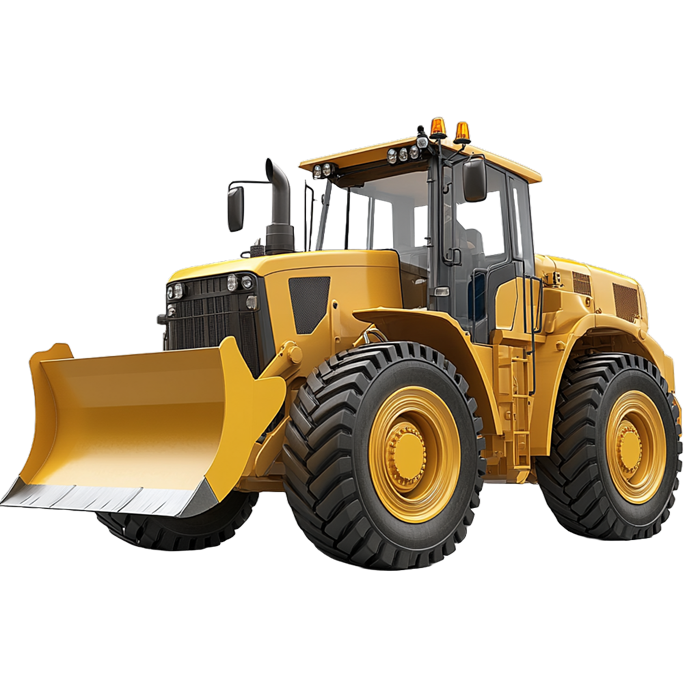
A wheel loader is a four-wheeled machine with a front-mounted bucket designed to scoop, carry and load bulk materials at speed — the standard choice for stockpile work, truck loading and site cleanup where moving volume quickly across firm ground is the priority. An excavator is a tracked machine with a hydraulic arm and bucket designed to dig, trench and place material with precision — the correct choice when the job requires breaking ground, working at depth or operating on soft or uneven terrain where wheeled machines lose traction.
These machines are often compared because both move earth — but they do fundamentally different things, and most experienced operators would not substitute one for the other on the right job. The comparison matters most for contractors and site managers who need to justify a single machine purchase that covers the widest range of tasks, or who are deciding which to hire or buy first. This guide walks through the four questions that resolve the comparison for most Australian civil, construction and agricultural operations. Browse wheel loaders and excavators from verified Australian suppliers on IndustrySearch to compare current models alongside this guide.
This comparison is relevant across:
- Civil contractors evaluating their first or second machine purchase
- Earthmoving and excavation businesses expanding their fleet
- Quarrying and mining operations managing bulk material movement
- Agricultural operations needing multi-purpose earthmoving capability
- Landscaping and site preparation contractors in QLD, NSW and WA
- Local government and utilities managing trenching, drainage and civil maintenance
Start with your primary task
Before evaluating cost or specs, confirm what the machine will spend most of its operating hours doing. The primary task resolves this comparison faster than any other factor — and choosing the wrong machine for the dominant task is the most common and costly mistake in earthmoving equipment selection.
Task | Wheel Loader | Excavator |
|---|---|---|
Loading trucks from stockpiles |
Purpose-built for this task |
Slower cycle time; less efficient |
Digging trenches and footings |
Cannot dig at depth |
Purpose-built for this task |
Moving bulk material across a large flat site |
Fast travel speed; high payload |
Slow travel speed; lower efficiency |
Demolition and structure removal |
Limited reach and precision |
Hydraulic arm provides reach and controlled force |
Working on soft or waterlogged ground |
Wheeled traction limits performance |
Tracked undercarriage distributes weight |
Site cleanup and general material handling |
Fast, versatile across firm ground |
Capable but slower |
Pipe and cable laying |
Cannot excavate to required depth or precision |
Standard equipment for this task |
Travelling between worksites without a trailer |
Can self-travel at road speed (where permitted) |
Requires low-loader transport |
If digging depth or precision trenching is the primary task, the excavator is the only viable choice — a wheel loader cannot substitute for it regardless of attachment options. If bulk loading, stockpile management or high-speed material movement is the dominant task, the wheel loader delivers meaningfully better productivity than an excavator at the same capital cost. Once the primary task is confirmed, move to Step 2 to evaluate the performance specs that matter.
Evaluate the key performance differences
With primary task confirmed, these specifications determine which machine delivers the right capability for your site and operating conditions.
Specification | Wheel Loader | Excavator |
|---|---|---|
Bucket capacity |
0.5m³–10m³+ |
0.03m³–4m³+ |
Max digging depth |
Minimal — surface scrape only |
1.5m (mini) to 7m+ (large) |
Travel speed |
20–40 km/h |
3–6 km/h (tracked) |
Operating weight |
3,000kg–30,000kg+ |
1,000kg (mini) to 100,000kg+ (large) |
Ground pressure |
Higher — wheeled contact points |
Lower — tracked undercarriage distributes weight |
Attachment versatility |
Bucket, forks, brooms, snow blades |
Bucket, auger, rock breaker, grapple, compactor, tilt rotator |
Visibility from cab |
Good forward; limited to sides |
360° upper structure rotation; full dig area visibility |
Fuel consumption |
10–30 L/hr depending on size and task |
5–25 L/hr depending on size and task |
Understand the cost differences (2026 prices)
Purchase price is only part of the picture — fuel, tyres and undercarriage maintenance create meaningfully different operating cost profiles between the two machine types over a full ownership period.
Cost Factor | Wheel Loader | Excavator |
|---|---|---|
Purchase price — compact / mini |
$22,900–$60,000 |
$30,000–$80,000 (mini) |
Purchase price — mid-range |
$60,000–$130,000 |
$80,000–$250,000 |
Purchase price — large |
$130,000–$185,000+ |
$250,000–$500,000+ |
Used / refurbished |
$15,000–$80,000 |
$20,000–$150,000 |
Annual maintenance |
$5,000–$20,000 |
$6,000–$25,000 |
Tyres / undercarriage |
$3,000–$15,000 per set (tyres); every 3–5 years |
$8,000–$40,000 per undercarriage set; every 3,000–5,000 hours |
Fuel consumption |
$15–$50/hr at current diesel prices |
$10–$40/hr at current diesel prices |
Transport between sites |
Can self-travel (where permitted) — no trailer cost |
Requires low-loader; $300–$1,500 per move depending on distance |
At equivalent machine size, excavators generally carry a higher purchase price but lower fuel consumption per hour on targeted dig tasks. The wheel loader's key cost advantage is mobility — self-travelling between sites eliminates low-loader hire costs that compound significantly for contractors running multiple short-duration sites across NSW, QLD or WA. Undercarriage replacement is the excavator's largest lifecycle cost beyond purchase price and should be included in any 5–10 year TCO model. For detailed pricing guidance on excavator configurations and size tiers, see the IndustrySearch excavator price and buying guide.
Step 4: Decision framework — wheel loader or excavator?
With primary task, performance and cost mapped, this framework resolves the decision for most Australian operations. Match your situation to the right column.
Your Situation | Choose Wheel Loader | Choose Excavator |
|---|---|---|
Primary task |
Bulk loading, stockpile management, truck filling |
Trenching, digging, demolition or precision earthmoving |
Digging depth required |
Surface work only — no depth required |
Below 500mm depth needed for any task |
Ground conditions |
Firm, compacted or hardstand surfaces |
Soft, wet, uneven or confined ground |
Site mobility requirement |
Frequent moves between nearby sites — self-travel is a priority |
Stays on one site for extended periods; transport cost is manageable |
Material volume per day |
High — loading speed and payload capacity are the priority |
Moderate — precision and reach matter more than raw volume |
Attachment versatility |
Bucket, forks and broom meet your needs |
Rock breaker, auger, grapple or tilt rotator required |
Industry / application |
Quarrying, agriculture, port operations, waste management |
Civil construction, utilities, landscaping, demolition, mining |
Budget constraint |
Compact wheel loaders from $22,900 — lower entry price at small size |
Mini excavators from $30,000 — broader task capability at entry level |
Evaluate suppliers
You're ready to go to market. Use this checklist to assess suppliers of either machine type against the same criteria.
Factor | What to Ask |
|---|---|
Task validation |
Has this model been used for my primary task in Australian conditions? Can you provide a reference site? |
Bucket or attachment spec |
What bucket size and attachment options suit my material type and task, and what is included in the base price? |
Ground conditions suitability |
Is this model rated for my site's ground conditions — including soft ground, slopes or confined access? |
Undercarriage or tyre spec |
What tyre or track specification is fitted, and what is the replacement cost and expected lifespan at my utilisation? |
Fuel consumption data |
What is the actual fuel consumption per hour at my expected duty cycle — not the manufacturer's rated figure? |
Local service coverage |
Do you have service technicians and parts in my state, or is support contracted or remote? |
Spare parts availability |
Are wear parts, hydraulic components and filters stocked locally or imported to order? |
Hire option |
Is hire available to trial the machine on my site before committing to purchase? |
Warranty coverage |
What does the warranty cover — powertrain, hydraulics, undercarriage or full machine? |
Finance options |
Do you offer chattel mortgage, hire purchase or operating lease, and through which lender? |
Frequently asked questions
What is the main difference between a wheel loader and an excavator?
A wheel loader scoops and carries bulk material at speed on firm ground — it is built for high-volume loading, stockpile management and site cleanup where travel speed and payload are the priority. An excavator digs, trenches and places material with precision using a hydraulic arm — it is built for below-ground work, confined sites and soft terrain where digging depth and controlled placement matter more than cycle speed.
Can a wheel loader dig like an excavator?
Not effectively. A wheel loader can scrape and push surface material but cannot excavate at depth — it has no boom or arm mechanism to dig below ground level. For any task requiring trenching, footing excavation or work below 500mm depth, an excavator is the correct machine regardless of wheel loader bucket size.
Which machine is better value for a contractor working across multiple sites?
If the primary task is loading and material movement across firm ground, the wheel loader's self-travel capability eliminates low-loader hire costs that add $300–$1,500 per site move — a significant advantage for contractors operating across multiple short-duration sites in NSW, QLD or WA. If the primary task involves digging, the excavator is the correct choice regardless of transport cost.
Can i use a mini excavator instead of a full-size wheel loader?
For tasks that genuinely require digging, yes — a mini excavator from $30,000 covers trenching, small footing work and confined site access that a wheel loader cannot perform at any price. For bulk loading and stockpile work, a mini excavator is a poor substitute — its slower cycle time and smaller bucket capacity mean significantly lower productivity on high-volume loading tasks compared to even a compact wheel loader.
Summary
- Wheel loaders excel at bulk loading, stockpile management and high-speed material movement on firm ground — excavators cannot match their productivity on these tasks
- Excavators are the only viable choice for digging below 500mm, trenching, pipe laying and precision earthmoving — a wheel loader cannot substitute regardless of bucket or attachment
- Wheel loaders self-travel at 20–40 km/h; excavators require a low-loader at $300–$1,500 per move — a material cost difference for multi-site contractors
- Excavators carry a broader attachment range (rock breaker, auger, grapple, tilt rotator) making them more versatile on complex civil and demolition tasks
- Neither machine requires an HRWL in Australia, but WHS Act 2011 competency obligations apply to both — confirm site induction requirements before deployment
- Undercarriage replacement is the excavator's largest lifecycle cost after purchase; tyre wear is the equivalent for wheel loaders on abrasive surfaces
Ready to compare models?
Don't waste time contacting suppliers individually. IndustrySearch gives you direct access to verified Australian earthmoving equipment suppliers — compare wheel loaders and excavators, specs and pricing in one place, then request quotes from suppliers best matched to your operation.
- Compare models — filter by machine type, capacity and region
- Request quotes — contact multiple verified suppliers with a single enquiry
- Contact suppliers directly — speak to specialists who service your state
→ Compare Wheel Loaders on IndustrySearch | Compare Excavators on IndustrySearch



-160x160-state_article-rel-cat.png)