
Key takeaways
The standards are in force: the national standards commenced on 12 February 2025 (NSW applies them from 12 February 2026), and businesses that wash, trim, sort, sanitise, store or pack harvested leafy vegetables, melons or berries are primary processors under Standards 4.2.8, 4.2.9 and 4.2.7. Registration, licensing or notification requirements are set by each state or territory, so check with your food regulator.
Washing has a legal outcome: leafy vegetable and melon processors must take all reasonable measures so washing removes all visible material such as soil, and so washing or sanitising does not make produce unsafe or unsuitable.
Wash before you sanitise: dirt weakens sanitisers, so sanitising should follow washing. FSANZ suggests auto-dosing and regular monitoring of water quality and sanitiser levels.
Water and equipment: FSANZ guidance says post-harvest wash and cooling water should be town water or similar potable quality, and equipment must allow effective cleaning and sanitising.
Cut first and the rules change: shredding or dicing before washing is manufacturing under Chapter 3 (Standards 3.2.2 and 3.2.3), not primary processing.
If you wash leafy vegetables, melons or berries for sale, your wash line is now part of your legal compliance, not just your quality program. This guide explains what the FSANZ horticulture standards require of washing and sanitising, which businesses they cover, and what that means when you specify or buy washing equipment.
Who the standards cover
Produce | Standard | Registration | Washing and sanitising requirement |
|---|---|---|---|
Leafy vegetables eaten raw (lettuce, spinach, kale, Asian greens, leafy herbs, baby leaves) | 4.2.8 | Register, license or notify as your state or territory requires | Section 11 of Standard 4.2.8; approved food safety management statement required |
Melons | 4.2.9 | Register, license or notify as your state or territory requires | Section 11 of Standard 4.2.9; approved food safety management statement required |
Berries (strawberries, blueberries, Rubus berries) | 4.2.7 | Notify or license as your state or territory requires | No separate washing clause, but water as an input and premises and equipment must not make berries unacceptable |
Other produce (potatoes, carrots, citrus, apples) | No commodity standard | No Chapter 4 commodity requirement | Retailer schemes and, for manufacturing activities, Chapter 3 still apply |
The definition of leafy vegetables turns on the leaf being eaten raw. FSANZ lists broccoli, cauliflower, celery, leek, root and bulb vegetables among the produce that falls outside it.
A business is a primary processor if it does any of the listed activities, regardless of the quantity of produce or how often. FSANZ gives a clear dividing line: a business that sorts, trims and boxes whole lettuce is under Standard 4.2.8, while one that shreds spinach and then washes it is manufacturing under Chapter 3. Retail sales and food service sit outside the horticulture standards.
What "effective washing" means for your equipment
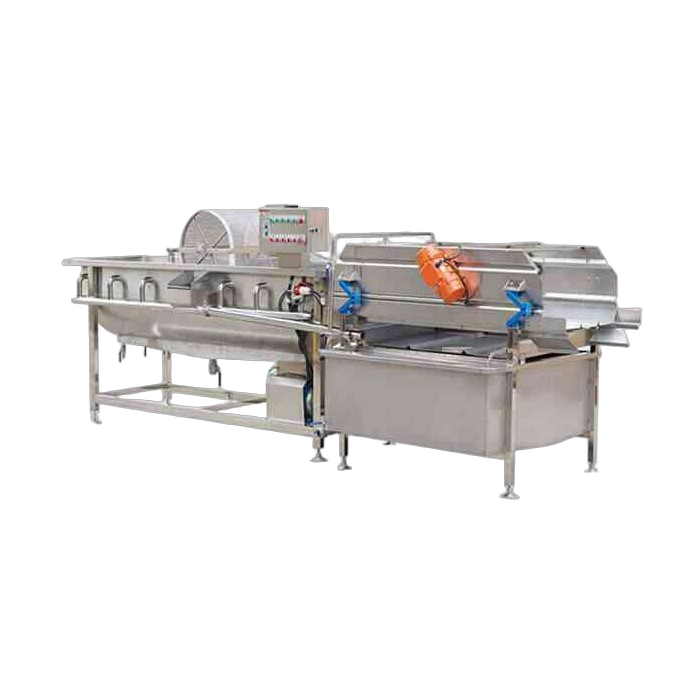
The standards are outcomes-based: they say what must be achieved, not which machine to use. In practice, FSANZ guidance and good practice point to a wash line for leafy vegetables or melons that can:
Remove visible soil first. Brushes, spray bars or flume dwell time must be enough for your dirtiest intake, including produce harvested after storms; FSANZ guidance suggests adjusting the washing regime after weather events.
Sanitise as a separate, controlled stage. Sanitiser applied to dirty water or dirty produce loses effectiveness, so the line needs a clean wash ahead of the sanitising step.
Keep water quality under control. Start with potable-quality water, and if you recirculate, filter and treat it so it does not become the contamination source.
Dose and monitor sanitiser. Auto-dosing with regular monitoring helps keep concentrations within your validated range shift after shift.
Be cleanable and sanitisable. Premises and equipment must allow effective cleaning and sanitisation, and food-contact parts such as conveyor belts must be kept clean and sanitised.
Choosing and controlling sanitisers
Chemicals added to wash water are generally regulated as processing aids and must be permitted under the Food Standards Code (Standard 1.3.3 and Schedule 18, which lists permitted bleaching, washing and peeling agents). The common choices behave differently:
Chlorine: effective and low cost, but strongly affected by pH, temperature and organic load. Monitor free chlorine and pH, not just the dose added.
Chlorine dioxide: less affected by pH and organic matter, which suits dirtier or recirculated water.
Peracetic acid (PAA): widely used in produce washing; confirm the product is food-grade and permitted for the use.
Set the target concentration from the product label and your validated procedure, then record every check. Inline sensors or test kits are part of the line, not an optional extra, if you want records an auditor will accept.
Food safety management statement, verification and records
Leafy vegetable and melon businesses must have a food safety management statement approved or recognised by the relevant authority, and operate according to it. It must identify hazards, set control measures and show verification that the controls work, such as water testing, sanitiser records and cleaning checks.
An existing scheme can cover much of this. FSANZ notes that businesses on a GFSI-recognised scheme may meet the outcome if the authority recognises it. Direct suppliers to the major retailers already need a GFSI base scheme (Freshcare, GLOBALG.A.P., SQF or BRC) plus HARPS.
Traceability is also mandatory: you must be able to identify who you received produce from and who you supplied, at least one step each way. FSANZ recommends batch or lot identification and regular mock recalls.
Equipment checklist for compliant washing
The standards set the outcome, not the equipment, so these are practical specifications rather than items the law names.
Separate wash and sanitise stages, or a validated combined process
Automatic sanitiser dosing with inline monitoring or a documented test routine
Filtration on any recirculated water, with a defined water change schedule
Drainable tanks and open frames that can be cleaned and sanitised
Food-contact surfaces of non-porous material, with belts and brushes that can be removed or sanitised
Lighting good enough to inspect washed produce
Records for water source testing, sanitiser readings and cleaning
For how different washer types handle soil, bruising and water use, see [Article 3: Drum, Brush, Barrel or Flume?].
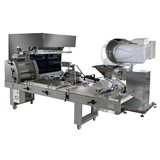
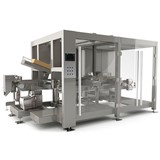
Compare suppliers: request quotes from fruit and vegetable processing machine suppliers on IndustrySearch and ask each to explain how their line supports washing, sanitising and record-keeping under Standards 4.2.8 and 4.2.9.
Frequently asked questions
Do I need to register if I only wash and pack lettuce?
Yes. Washing and packing harvested leafy vegetables makes you a primary processor under Standard 4.2.8, and you must meet your state or territory's registration, licensing or notification requirement. Check with your state or territory food regulator.
Do the standards apply to potatoes or carrots?
No. Root and bulb vegetables are not covered by a Chapter 4 commodity standard, although retailer schemes still set washing requirements.
Can I recycle wash water?
Yes, provided it does not make the produce unsafe or unsuitable. Filter and treat recirculated water, monitor sanitiser levels, and change water on a set schedule.
What chlorine level should I use?
Use the concentration on the product label and in your validated procedure, and monitor free chlorine and pH, because chlorine effectiveness depends on both and on how dirty the water is.
Does Freshcare certification meet the food safety management statement requirement?
It can. A GFSI-recognised scheme may meet the outcome, but the relevant authority must recognise or verify it.