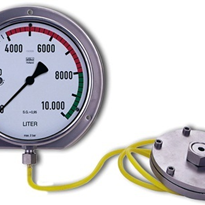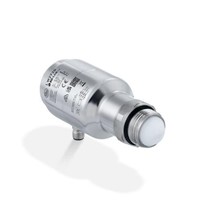


Accurate level measurement plays a central role in maintaining safe and reliable industrial storage systems. Whether monitoring municipal water reservoirs, diesel tanks, wastewater pits, chemical vessels, or irrigation systems, dependable level sensors protect infrastructure and reduce operational risk.
When level monitoring fails, the consequences are immediate. Tanks overflow and create environmental hazards. Pumps run dry and suffer mechanical damage. Fuel systems experience supply interruptions. Chemical storage exceeds safe operating limits. In each case, the root issue is insufficient visibility into liquid level conditions.
Modern level sensors provide continuous monitoring and automated alarm control, helping facilities prevent failures before they escalate.
Continuous vs Point Level Measurement
Industrial tank monitoring systems typically use two measurement strategies.
Continuous Level Measurement
Continuous level sensors provide real-time proportional output that reflects the exact liquid height inside a tank or well. This supports:
• Pump automation
• Inventory monitoring
• Data trending
• Predictive maintenance
Continuous transmitters are widely used where automation, reporting, and operational visibility are required.
Point Level Detection
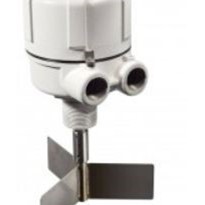
Point level devices act as switches. They activate when liquid reaches a predefined high or low threshold. These are commonly used for:
• High-level overflow alarms
• Low-level pump dry-run protection
• Emergency shutdown systems
In higher-risk installations, continuous transmitters are often paired with independent point-level switches to increase redundancy and strengthen system safety.
Hydrostatic Level Sensors for Submerged Applications
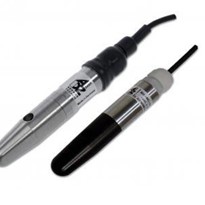
Hydrostatic level sensors measure liquid height using static pressure at the bottom of a tank or well.
As liquid depth increases, pressure rises proportionally. The transmitter calculates level using the relationship between pressure, liquid density, and gravitational force. This method is particularly effective in deep or submerged environments.
Typical applications include:
• Boreholes and deep wells
• Reservoirs and dams
• Groundwater monitoring
• Wastewater pits
• Irrigation storage tanks
Submersible stainless-steel construction allows direct immersion. Diffused silicon or MEMS sensing elements provide stable long-term performance. A vented cable design compensates for atmospheric pressure changes, maintaining measurement accuracy in open systems.
Measurement ranges may extend up to 200 metres depending on configuration, making hydrostatic transmitters suitable for large-scale and deep installations.
View Product Details
https://aps-technology.com.au/product/level-sensors
Ultrasonic Level Sensors for Non-Contact Measurement
Ultrasonic level sensors measure liquid height without contacting the medium.
The sensor emits an acoustic pulse toward the liquid surface and measures the return time to calculate distance. Built-in temperature compensation helps maintain accuracy under changing environmental conditions.
Non-contact measurement is particularly beneficial where liquids may be corrosive, contaminated, or prone to coating sensors.
Common applications include:
• Chemical tanks
• Sludge and slurry pits
• Sewage treatment systems
• Cooling towers
• Fuel storage tanks
• Open-channel monitoring
Measurement ranges may extend up to 50 metres depending on model. Output options typically include 4–20 mA analog signals and RS485 communication for integration into industrial control systems.
Tank Monitoring in Water, Fuel and Chemical Systems
Water and Wastewater
Reservoirs, pump stations, and stormwater pits rely on accurate level monitoring to prevent overflow and stabilise pump sequencing. Continuous measurement improves visibility across distributed assets and reduces manual inspection requirements.
Fuel Storage
Level sensors prevent overfilling and reduce the risk of supply interruption. Maintaining accurate inventory data supports operational continuity in generator systems, mining equipment, and industrial facilities.
Chemical Processing
Chemical storage requires precise level control to reduce spill risk and maintain dosing accuracy. Non-contact ultrasonic measurement is often preferred in aggressive or corrosive environments.
Across these industries, level sensors function as protective infrastructure rather than simple measurement devices.
Integration with PLC and SCADA Systems
Modern industrial level sensors are designed for seamless integration into automation platforms.
Common output options include:
• 4–20 mA analog signals
• RS485 Modbus communication
• RS232
• HART protocol
• Wireless telemetry (model dependent)
Integration enables:
• Automated pump start and stop control
• High- and low-level alarms
• Overflow shutdown procedures
• Remote monitoring
• Compliance data logging
Reducing reliance on manual inspection improves operational resilience and minimises human error.
Industrial Durability and Hazardous Area Protection
Level sensors used in industrial environments must withstand demanding operating conditions. Protection ratings such as IP67 and IP68 support submerged and outdoor installations. Stainless-steel housings improve corrosion resistance and durability in high-vibration environments.
Explosion-proof configurations may be required in hazardous areas where flammable vapours are present.
Selecting the appropriate level sensor depends on:
• Tank depth
• Liquid type
• Environmental exposure
• Automation requirements
• Regulatory compliance obligations
Supporting Safer and More Reliable Storage Systems
Reliable level monitoring is fundamental to preventing overflow incidents, eliminating pump dry-run damage, and maintaining safe storage conditions in industrial environments.
Hydrostatic and ultrasonic level sensors provide scalable solutions for deep wells, wastewater systems, chemical tanks, and fuel storage facilities. When integrated into automation platforms, they strengthen infrastructure resilience and improve long-term operational reliability.




-160x160-state_article-rel-cat.png)