
Key takeaways
Factor | Typical Range / Value | Buyer Implication |
|---|---|---|
Entry-level new reach forklift (2026) |
$25,000–$40,000 AUD |
Single-deep, lead-acid, 6–8m lift height |
Mid-range new reach forklift |
$40,000–$60,000 AUD |
8–10m lift, lithium-ion option, camera system |
High-spec / double-deep / high-reach |
$60,000–$75,000+ AUD |
10m–13m+, lithium-ion, integrated telematics |
Used / refurbished |
$12,000–$35,000 AUD |
Battery health and mast condition must be independently assessed |
Annual maintenance cost |
$3,500–$8,000 AUD |
Higher for multi-shift and high-reach operations above 10m |
Battery replacement cycle |
3–5 years (lead-acid) / 5–8 years (lithium) |
The single largest variable in 10-year TCO after purchase price |
10-year total cost of ownership |
$95,000–$185,000 AUD |
Purchase price is typically 30–45% of total 10-year cost |
What does a reach forklift actually cost to own in Australia?
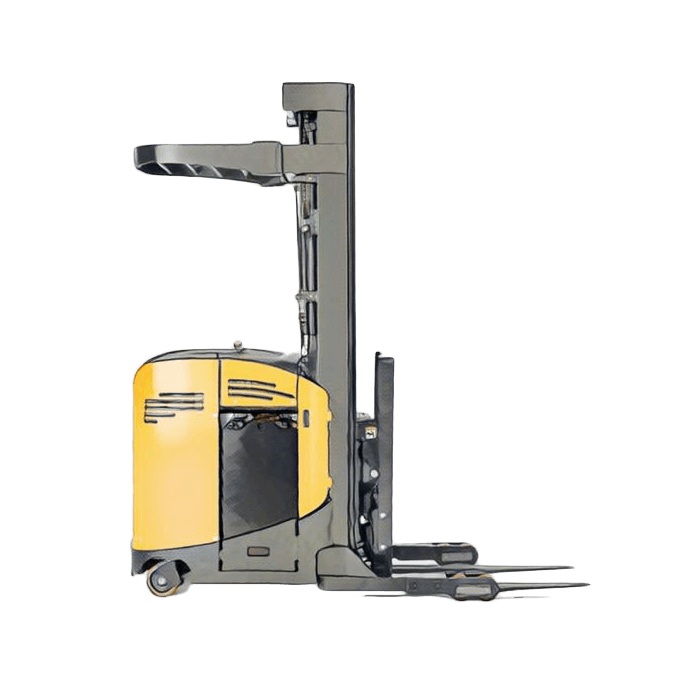
A reach forklift is a battery-electric narrow-aisle warehouse machine that lifts pallets into high racking using an extending mast or fork carriage — the standard equipment choice for Australian distribution centres and 3PL operations running racking above 6m. The sticker price tells you less than half the story. For a mid-range unit running a single shift, purchase price typically represents only 30–45% of the total cost over a 10-year ownership period once battery replacement, maintenance, energy and downtime risk are factored in.
This guide is for warehouse managers and procurement leads who have already identified reach forklifts as the right equipment and now need to build a credible cost model for capital approval — one that accounts for every cost layer, not just the invoice price. Browse verified Australian reach forklift suppliers on IndustrySearch to compare current pricing alongside this guide.
Reach forklifts are standard equipment across:
- Distribution centres and third-party logistics operations
- Retail and e-commerce fulfilment warehouses
- Food and beverage storage with high-bay racking
- Cold store operations requiring narrow-aisle access
- Manufacturing facilities with internal parts or raw material storage
- Pharmaceutical and healthcare logistics requiring indoor, zero-emission equipment
Understand what drives the purchase price
Before modelling the full cost, confirm which configuration your operation needs. Configuration is the primary driver of purchase price — the difference between an entry-level and high-spec machine is $35,000–$50,000 AUD.
Configuration | Price Range (AUD) | What You Get |
|---|---|---|
Entry-level single-deep, lead-acid |
$25,000–$40,000 |
6–8m lift, standard controls, stand-on operator position |
Mid-range single-deep, lithium-ion option |
$40,000–$60,000 |
8–10m lift, camera system, improved ergonomics, telematics ready |
High-spec double-deep or high-reach |
$60,000–$75,000+ |
10m–13m+ lift, lithium-ion, integrated camera and telematics |
Used / refurbished |
$12,000–$35,000 |
Savings of 30–60% vs new — battery health is the critical variable |
Lithium-ion adds $8,000–$15,000 to the upfront price of any configuration but reduces battery replacement frequency and eliminates the need for a spare battery in multi-shift operations — a cost that otherwise adds $4,000–$8,000 to the lead-acid TCO. Once you've confirmed your configuration, move to Step 2 to model the full running cost.
Map the full cost breakdown (2026 prices)
Purchase price is only part of the picture — most cost models that get rejected at approval stage have missed the running cost layer. Here is every cost category a reach forklift generates over its operating life.
Cost Category | Annual Cost (AUD) | Notes |
|---|---|---|
Scheduled servicing |
$2,500–$6,000 |
Every 500–1,000 operating hours; higher for multi-shift and 10m+ machines |
Unscheduled repairs |
$500–$2,000 |
Lower in years 1–3; increases significantly after year 6–7 |
Energy (charging) |
$800–$2,000 |
Based on single-shift operation; lithium-ion uses 15–20% less energy than lead-acid |
Tyres |
$400–$900 (amortised) |
Polyurethane cushion tyres; replacement every 3–5 years depending on floor surface |
Compliance / inspection |
$300–$600 |
Annual inspection required under WHS Act 2011 and AS 2359 |
Battery replacement (lead-acid) |
$800–$1,600 (amortised) |
$4,000–$8,000 every 3–5 years; multi-shift ops need a spare battery on top |
Battery replacement (lithium-ion) |
$1,000–$2,500 (amortised) |
$8,000–$15,000 every 5–8 years; no spare battery required |
Pricing reflects 2026 Australian market conditions for a single machine running one shift. Multi-shift operations should apply 1.5–2x the servicing and energy figures above. For NSW and VIC operations, factor in 8–12 week lead times on parts for less common machine brands — this is a material downtime risk that a local service contract mitigates. For guidance on finance structures for this asset class, see the IndustrySearch forklift finance guide.
Model the 10-year total cost of ownership
With annual cost categories mapped, the table below builds the full 10-year TCO for each configuration. This is the number your approval document needs — not the purchase price alone.
Cost Component | Entry-Level (AUD) | Mid-Range (AUD) | High-Spec (AUD) |
|---|---|---|---|
Purchase price |
$25,000–$40,000 |
$40,000–$60,000 |
$60,000–$75,000+ |
Servicing × 10 years |
$25,000–$40,000 |
$30,000–$50,000 |
$35,000–$60,000 |
Battery replacement × 10 years |
$8,000–$16,000 |
$8,000–$15,000 |
$8,000–$15,000 |
Energy × 10 years |
$8,000–$20,000 |
$8,000–$18,000 |
$9,000–$20,000 |
Tyres, compliance, other × 10 years |
$7,000–$15,000 |
$7,000–$15,000 |
$8,000–$15,000 |
10-year total |
$73,000–$131,000 |
$93,000–$158,000 |
$120,000–$185,000 |
The key insight from this model: servicing is the largest single cost category over 10 years — exceeding purchase price in every configuration. A service contract from a supplier with local technicians in your state is not a premium; it's the most direct lever on 10-year TCO. Compare current reach forklift pricing from verified Australian suppliers at IndustrySearch, or compare broader electric forklift options if your configuration is still being finalised.
Plan the asset — depreciation and financing
Reach forklifts are classified as materials handling plant and equipment for ATO depreciation purposes, with an effective life of 10–12 years. Under the diminishing value method the depreciation rate is 20% per year; under prime cost it is 10% per year. Confirm the current instant asset write-off threshold with your accountant before finalising your approval — on a $40,000–$75,000 asset this can materially affect the year-one tax position. Residual value for well-maintained machines sits at 15–25% of purchase price at the 8–10 year mark, with lithium-ion equipped models holding value better in the Australian used market.
For operations where volume or warehouse configuration may shift, operating leases on 24–60 month terms are available from most major suppliers and some independent finance brokers — typically at $700–$1,400 per month for a mid-range machine depending on term length and residual. A chattel mortgage preserves GST recovery and allows depreciation claims from day one; an operating lease keeps the asset off the balance sheet and includes maintenance in some arrangements. For a detailed breakdown of forklift finance structures in Australia, see the IndustrySearch forklift finance guide.
Evaluate suppliers on cost and service
You're ready to go to market. Use this checklist to assess each supplier against the same criteria — with a focus on the cost factors that will drive your 10-year TCO.
Factor | What to Ask |
|---|---|
Service contract options |
What are the terms of a full-maintenance contract, and what does it exclude? |
Local technician coverage |
Do you have service technicians based in my state, or is support contracted out? |
Parts availability |
Are mast components, reach mechanisms and electrical parts stocked locally or imported to order? |
Average response time |
What is your guaranteed response time for breakdown callouts in my region? |
Battery warranty and replacement cost |
What is the battery warranty, and what is the replacement cost at end of warranty? |
TCO modelling |
Can you provide a 5 or 10-year TCO model for this configuration at my utilisation level? |
Used machine inspection |
Will you provide a full inspection report including battery state of health before purchase? |
Warranty coverage |
Does the warranty cover mast, reach mechanism and battery, or machine chassis only? |
Finance options |
Do you offer chattel mortgage, operating lease or hire-to-own, and through which lender? |
Trade-in or buyback |
Do you offer trade-in or buyback at the end of ownership, and on what terms? |
Frequently asked questions
What is the total cost of ownership for a reach forklift over 10 years?
Total 10-year cost ranges from $73,000–$131,000 for entry-level configurations to $120,000–$185,000 for high-spec machines, with purchase price representing only 30–45% of the total. Servicing is consistently the largest cost category over a 10-year period, exceeding purchase price in most configurations.
Is lithium-ion worth the extra cost on a reach forklift?
For multi-shift operations, yes — lithium-ion eliminates the need for a spare battery ($4,000–$8,000), charges in 1–2 hours versus 8 hours for lead-acid, and lasts 5–8 years versus 3–5 years. For single-shift operations with reliable overnight charging, lead-acid remains cost-effective at the 10-year horizon.
How much does it cost to service a reach forklift annually?
Scheduled servicing runs $2,500–$6,000 per year for a single-shift machine, with additional unscheduled repair costs of $500–$2,000 annually. Costs increase after year 6–7 as wear components require replacement — a full-maintenance service contract from year one is the most reliable way to control this exposure.
How much does it cost to replace a reach forklift battery?
Lead-acid battery replacement costs $4,000–$8,000 every 3–5 years; lithium-ion replacement costs $8,000–$15,000 every 5–8 years. Multi-shift operations running lead-acid also need a spare battery ($4,000–$8,000) to maintain productivity during charging cycles — a cost that does not apply to lithium-ion.
Is it worth buying a used reach forklift?
Used machines offer 30–60% savings over new equivalents, but battery state of health is the critical variable — a degraded lead-acid battery requiring immediate replacement adds $4,000–$8,000 to the effective purchase price. Always commission an independent inspection report including battery health before committing.
What compliance costs apply to reach forklifts in Australia?
Under the WHS Act 2011 and AS 2359, reach forklifts require annual inspection by a competent person, typically costing $300–$600 per machine. Operators must hold an LF class High Risk Work Licence; training costs $300–$600 per operator through a registered RTO.
Summary
- Purchase price is 30–45% of total 10-year cost — servicing is consistently the largest cost category over the ownership period
- Lithium-ion adds $8,000–$15,000 upfront but eliminates spare battery cost and reduces replacement frequency — viable TCO advantage for multi-shift operations
- Used machines are viable from $12,000 — independent battery inspection is non-negotiable before purchase
- A local service contract is the single most effective lever on 10-year TCO after configuration choice
- Chattel mortgage and operating lease are both viable — structure depends on balance sheet, cash flow and tax position
- Annual WHS inspection ($300–$600) and LF class licence for all operators are non-negotiable compliance costs under Australian law
Ready to source your reach forklift?
Don't waste time contacting suppliers individually. IndustrySearch gives you direct access to verified Australian reach forklift suppliers — compare models, specs and pricing in one place, then request quotes from suppliers best matched to your operation.
- Compare models — filter by lift height, capacity and region
- Request quotes — contact multiple verified suppliers with a single enquiry
- Contact suppliers directly — speak to specialists who service your state

-160x160-state_article-rel-cat.png)




-160x160-state_article-rel-cat.png)