
Key takeaways
Gas ovens need regulator approval before use: industrial gas ovens are generally Type B appliances, assessed against AS 3814 and approved or accepted through each state or territory's own pathway, while certified Type A commercial appliances follow a different route. A CE mark does not satisfy either, and second-hand ovens are not automatically exempt.
Buy factory-direct and your business becomes the importer: under WHS law you must obtain the manufacturer's safety information, inspect the plant and test it where that information requires. Modify it and you take on designer and manufacturer duties too.
Specify Australian supply in the contract: 230/400 V, 50 Hz three-phase, connected by a licensed electrician, with English wiring diagrams and manuals.
Hygiene is a legal requirement: Food Standards Code Standard 3.2.3 requires equipment to be easily and effectively cleaned, so check frames, belts and food-contact surfaces before you sign.
Tie payments to acceptance tests: run a factory acceptance test with your dough before shipping and a site acceptance test before the final payment. These are contract protections, not legal requirements.
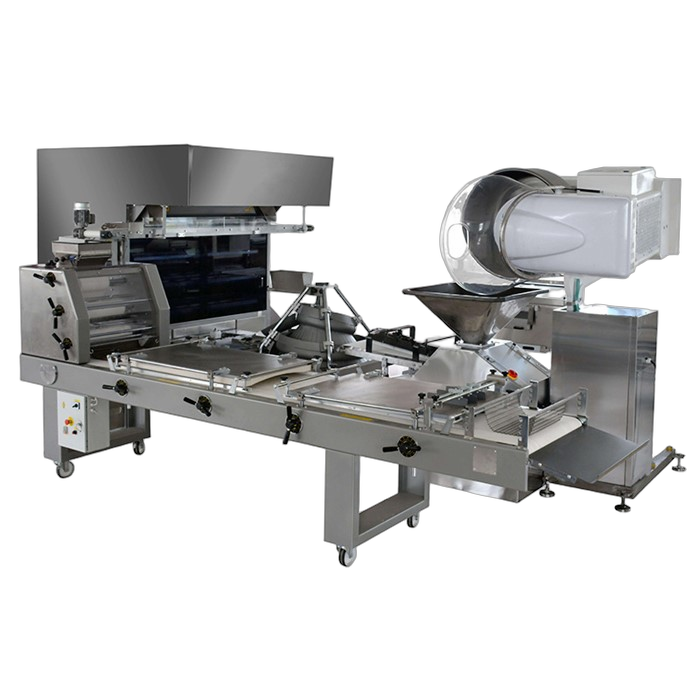
Most bread production lines installed in Australia are made overseas, by European makers such as Rondo, Fritsch, Diosna and WP, by Japanese maker Rheon, or by Chinese manufacturers. The real choice is who carries the importing risk: you, or a local supplier. This guide covers what has to be true before an imported line can legally and safely run, and the questions that expose a weak quote.
Three ways to buy, and who carries the risk
Route | Who is the importer | Price position | Compliance work | Support |
|---|---|---|---|---|
Local distributor of an overseas brand | The distributor | Higher than factory price | Distributor usually handles adaptation, documentation and approvals; confirm in writing | Local technicians and parts, if stocked |
Australian manufacturer or integrator | The local business | Varies | Built or configured for Australian requirements | Local |
Direct from an overseas factory | Your business | Lowest equipment price | You arrange gas approval, electrical compliance, WHS inspection and customs | Remote or fly-in technicians |
IndustrySearch lists suppliers across all three: distributors representing European bakery equipment makers, and Australian businesses such as Brisbane-based Inomach, which designs, manufactures and services dough processing lines and bakery ovens.
Gas ovens: Type B approval comes before connection
Australian gas law splits appliances into two types. Type A covers domestic and light commercial appliances, including commercial catering equipment, certified under recognised schemes. Type B covers larger industrial and commercial appliances; in Victoria that means any appliance over 10 MJ/h that is not Type A and is intended for manufacturing or industrial premises, including second-hand appliances. Not every commercial gas oven follows the same pathway: the category and approval route depend on the appliance and the state or territory, so confirm both with the regulator before ordering.
State | Regulator | What applies to industrial gas ovens |
|---|---|---|
Victoria | Energy Safe Victoria | Energy Safe must accept every gas appliance before it can be supplied, sold or installed; Type B acceptance runs through a submission or an accepted safety case |
Western Australia | Building and Energy | A Type B appliance cannot be used until approved and labelled; independent Type B inspectors assess a technical submission, and WA's guideline lists industrial ovens |
Queensland | Resources Safety & Health Queensland | A Type B gas device approval certificate is issued by an approved authority; a supplier selling before approval must give the owner a Type B approval notice |
Tasmania | Director of Gas Safety | Type B appliances must be designed and built to AS 3814 |
Other states and territories | The state or territory gas technical regulator | Confirm the pathway before ordering |
The assessment usually works from a technical submission, so ask the oven maker early for the burner management system design, flame safeguard and gas train component details, and the gas-side wiring and piping diagrams. AS 3814 covers the gas-firing system rather than the whole baking process, and installation follows AS/NZS 5601.1.
Two practical points save weeks. Book the Type B inspector while the oven is still being built, not after it lands. And make the contract state who prepares and pays for the submission, and who pays for any modifications the inspector requires.
Electric ovens sit outside the gas regime, but they still need electrical compliance (below).
Electrical: built for Australian supply
Voltage and frequency: Australian three-phase supply is 230/400 V at 50 Hz. Equipment built for 60 Hz markets can need motor and drive changes, so confirm the build specification in writing.
Connection: a licensed electrician must connect the line, and the installation must meet the AS/NZS 3000 wiring rules.
Documentation: ask for full electrical schematics, a bill of materials for the control panel and English-language manuals before shipping.
Washdown areas: check that motors, sensors and enclosures are rated for the cleaning method you will use.
WHS: the duties you take on as importer
Under the model WHS laws, a business that imports plant must ensure, so far as reasonably practicable, that it is without risks to health and safety. Safe Work Australia's guidance says that where a business obtains plant directly from overseas, it takes on the duties of an importer and supplier. That means:
obtaining the manufacturer's information on safe use, installation and maintenance
inspecting the plant against that information, and testing it if the information requires
not supplying or using it until identified hazards are controlled
taking on designer and manufacturer duties if you modify the plant, for example to suit Australian standards
Check guarding, interlocks and emergency stops against the AS 4024 machinery safety series, and complete a risk assessment before commissioning. If the line includes a boiler or pressure vessel, check whether design registration applies; Safe Work Australia's import guide notes that registrable plant must be registered before it is supplied.
Food safety: check hygienic design before you sign
Standard 3.2.3 requires equipment, fixtures and fittings to be easily and effectively cleaned, and food-contact surfaces to be cleanable and, where needed, sanitisable. On a production line, that translates to:
open frames with no hollow sections or ledges that trap flour and dough
belts and scrapers that come off without tools
stainless steel or food-grade materials on food-contact parts, with food-grade lubricants
enough clearance around the line to clean the floor beneath it
Customs, duty and GST in brief
Most bakery machinery carries a 5% general rate of duty, which a free trade agreement or Tariff Concession Order may reduce. Import GST of 10% applies at the border and is claimable if you are GST-registered. [Article 1: Bread Production Line Cost in Australia] works through a full landed-cost example. Use a licensed customs broker on any line of this value.
Acceptance tests, installation and commissioning
Acceptance tests and staged payments are not legal requirements. They are contract protections, and with an overseas supplier they are your main leverage.
Factory acceptance test (FAT): run the line at the factory with your flour or an agreed equivalent before it ships. Record output, piece weights and accuracy against the contract specification.
Site works ready before arrival: power, gas, air, drainage and floor works finished, and the Type B submission lodged.
Installation and site acceptance test (SAT): after installation, repeat the FAT measures on site. Tie the final payment to passing it.
Handover: English manuals, electrical drawings, a spare parts list with part numbers, the maintenance schedule, a backup of the PLC program, and operator and maintenance training.
Ask for a written schedule covering manufacture, sea freight, approvals, installation and commissioning, with named responsibilities for each stage.
Questions to ask every supplier before you sign
Who is the importer of record, and who prepares and lodges the Type B submission?
Is the oven's gas train and burner management designed to AS 3814?
Which voltage and frequency is the line built for?
Which wear parts are stocked in Australia, and what is the guaranteed technician response time?
Is remote diagnostics included, and will you have full access to the PLC program and passwords?
Does the warranty start at shipment, installation or site acceptance?
Are installation and commissioning technicians included, with travel and accommodation?
Can you speak to two Australian bakeries running the same line?
Compare suppliers: Request quotes from bread and bakery production line suppliers on IndustrySearch and put the same questions to each, so local and factory-direct offers can be compared on equal terms.
Frequently asked questions
Can I install a bread production line made in China in Australia?
Yes, provided it meets Australian gas, electrical, WHS and food safety requirements. Industrial gas ovens generally need Type B approval, and if you import directly, the WHS importer duties fall on your business.
Is CE marking enough for Australia?
No. CE marking shows conformity with European requirements. Australian gas approval, electrical installation rules and WHS duties still apply, although CE technical files help with the submissions.
Do electric bakery ovens need Type B approval?
No. Type B approval applies to gas appliances. Electric ovens need a compliant electrical installation by a licensed electrician.
Who is responsible if an imported machine injures a worker?
WHS duties sit with each party in the supply chain. If you imported the line yourself, you hold importer duties as well as your duties as the business operating it.
Can I import a used bread line from Europe?
Yes. Treat it as new for compliance: second-hand industrial gas appliances generally still need Type B approval, and guarding and electrical systems should be assessed against Australian requirements before use.