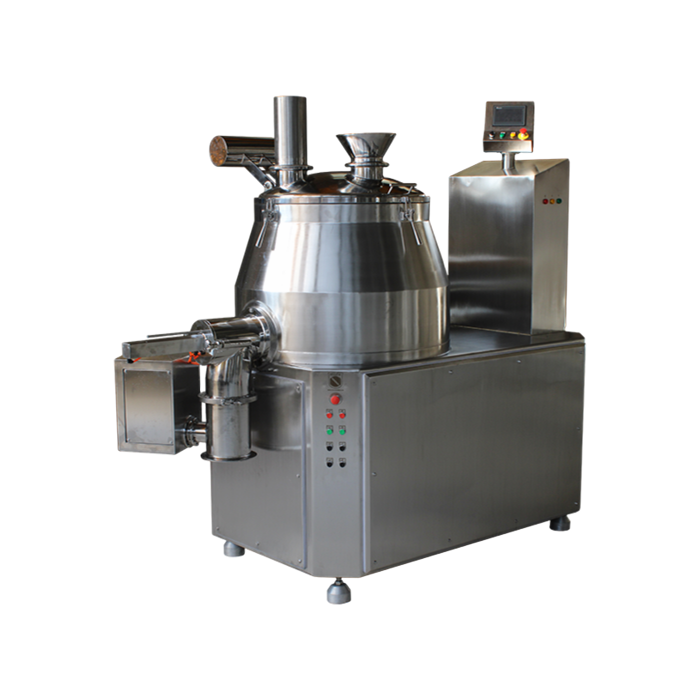

How to Choose a High Shear Mixer for Food, Pharmaceutical, Cosmetic and Chemical Production
Key takeaways
Food: Food Standards Code Standard 3.2.3 requires equipment that can be easily and effectively cleaned. It does not mandate a material, but 316 stainless steel wetted parts, cleanable seals and tool-free strip-down are the usual way buyers meet it.
Medicines, APIs and therapeutic sunscreens: manufacture in Australia must meet the PIC/S Guide to GMP PE009-17, adopted by the TGA from 1 September 2025 (except Annexes 4, 5 and 14). Choose a mixer whose supplier can provide the material certificates and documentation your qualification needs.
Cosmetics: no TGA manufacturing licence is needed for cosmetics, including cosmetic sunscreens, but primary sunscreens are therapeutic goods, so an emulsifier that will make them must sit in a TGA-licensed facility.
Solvents and combustible dusts: if the mixing area is a classified hazardous area, specify explosion-protected equipment with the right certification and documentation, and allow for a competent installer.
State the industry in the request for quote: the same rotor-stator design can cost and perform very differently once hygienic, GMP or hazardous-area requirements are added.
A high shear mixer for salad dressing, a sunscreen, a hand cream and a solvent-based coating may share a rotor-stator design, but each production environment adds its own selection criteria. Getting the specification right before you buy avoids the two most expensive outcomes: a mixer you cannot clean or validate properly, and a motor that cannot legally run in a hazardous area. This guide sets out what to specify for each industry, using Australian hygiene, GMP and hazardous-area requirements as purchasing criteria rather than as a regulatory explainer.
What to specify by industry, at a glance
Industry | Main framework | What to specify in the mixer |
|---|---|---|
Food and beverage | Food Standards Code Standard 3.2.3 | Cleanable design: commonly 316 stainless wetted parts, cleanable seals, CIP or quick strip-down |
Medicines, APIs, therapeutic sunscreens | Therapeutic Goods Act; PIC/S Guide to GMP PE009-17 | GMP-suitable build with material certificates and documentation to support qualification and cleaning validation |
Cosmetics and personal care | Not therapeutic goods; ingredients regulated through AICIS | Hygienic build; a GMP-style standard if customers expect it, and a licensed facility if you also make primary sunscreens |
Paints, inks, adhesives and solvent-based chemicals | AS/NZS 60079 series; IECEx or ANZEx certification | Explosion-protected motor and electrics certified for the classified zone, with installation documentation |
Food and beverage: specify for cleaning
Standard 3.2.3 requires food businesses to use equipment, fixtures and fittings that can be easily and effectively cleaned and, where necessary, sanitised. It sets the outcome rather than a material or design. For a high shear mixer, buyers usually meet it by specifying:
316 stainless steel wetted parts, which are common on industrial rotor-stator mixers and widely accepted in food plants, although the standard does not require a particular grade
seals and elastomers suited to your cleaning chemicals and temperatures
a mixing head that can be cleaned in place or stripped without tools
smooth surfaces and no crevices where product can lodge
Hygienic design certifications such as 3-A and EHEDG are voluntary, but they give buyers independent evidence of cleanability. Some manufacturers offer dedicated hygienic ranges, such as Silverson's Ultra-Hygienic series.
Therapeutic goods: specify for GMP qualification
The TGA's manufacturing principles give the PIC/S Guide to GMP legal force in Australia. Since 1 September 2025, manufacture of medicines, active pharmaceutical ingredients and sunscreens must meet PE009-17, apart from Annexes 4, 5 and 14, unless exempt under the Therapeutic Goods Regulations. Domestic manufacturers need a TGA licence to manufacture, and therapeutic sunscreens must be made in a TGA-approved facility.
For creams, ointments and liquids, the TGA points sunscreen manufacturers to Annex 9 of the guide on liquids, creams and ointments, which is directly relevant to vacuum emulsifiers and batch high shear mixers. In practice, ask your supplier for:
material certificates for product-contact parts and elastomers
surface finish details and drawings
documentation to support installation and operational qualification
information you need for cleaning validation, such as dead legs and dismantling steps
change control support if the design is modified
These are typical expectations for GMP equipment rather than a fixed checklist; your quality system and the TGA's inspection set the detail.
Cosmetics: when sunscreen changes the specification
Cosmetics are not therapeutic goods, so making them does not require a TGA manufacturing licence. The ingredients are regulated through the Australian Industrial Chemicals Introduction Scheme (AICIS). The exception that catches cosmetic manufacturers is sunscreen: primary sunscreens, whose main purpose is UV protection, and some secondary sunscreens are therapeutic goods, while cosmetic sunscreens are excluded. If you plan to make a primary sunscreen on your emulsifier, you need a TGA-licensed facility.
Solvents and dusts: specify for the hazardous area
If your product contains flammable solvents, or you induct combustible powders, the mixing area may be a hazardous area. In Australia, a competent person classifies it under AS/NZS 60079.10.1 for gas and vapour or AS/NZS 60079.10.2 for combustible dust. Equipment used in the zone must be suitable for it, with conformity shown through an accepted certification scheme and supporting documentation, and installation follows AS/NZS 60079.14, which supplements the AS/NZS 3000 wiring rules.
IECEx and ANZEx are the certification schemes recognised in Australia, and AS/NZS 60079.14 also sets out how equipment without an IEC-scheme certificate can be assessed for conformity. Regulators have warned that equipment certified outside these schemes needs proper conformity documentation, and inspectors have found uncertified motors in hazardous zones. When you buy:
state the zone, gas or dust group and temperature class in your request for quote
ask for the certificate of conformity for the motor and any electrical components on the mixer, and the equipment protection level it carries
confirm who prepares the installation documentation
use a licensed electrician with hazardous-area competency for installation
An ATEX marking from Europe does not by itself show conformity under the Australian framework. Ask whether the equipment also carries IECEx certification, or how its conformity will otherwise be assessed and documented under AS/NZS 60079.14.
What to include in every request for quote
Industry and product, including whether it is food, a therapeutic good, a cosmetic or a chemical
Any hazardous-area classification, with zone, group and temperature class
Cleaning method: clean in place, manual strip-down or both
Required materials, surface finish and seal type
Documentation you need: material certificates, qualification support, hazardous-area certificates
Batch size, viscosity and what the mixer must achieve (see [Article 2: Batch vs Inline High Shear Mixers])
Compare suppliers: request quotes from high shear mixer suppliers on IndustrySearch and include your industry requirements so each quote is built to the same specification. For budgets, see [Article 1: High Shear Mixer Prices in Australia].
Frequently asked questions
Do I need a TGA licence to make cosmetics with a high shear mixer?
No, cosmetics are not therapeutic goods. You do need a TGA-licensed facility to make therapeutic goods such as primary sunscreens.
Which GMP standard applies to medicine manufacturing in Australia?
The PIC/S Guide to GMP PE009-17, adopted by the TGA from 1 September 2025, except Annexes 4, 5 and 14.
Do I need an explosion-proof high shear mixer?
Only if the area where it runs is classified as hazardous because of flammable vapours or combustible dust. A competent person makes that classification under AS/NZS 60079.10.1 or 60079.10.2.
Is IECEx certification accepted in Australia?
Yes. IECEx and ANZEx are the recognised schemes, and AS/NZS 60079.14 also provides for assessing equipment without an IEC-scheme certificate. Installation follows AS/NZS 60079.14.
What material should a food-grade high shear mixer be made from?
The Food Standards Code requires equipment that can be easily and effectively cleaned rather than a specific material. 316 stainless steel wetted parts are the common choice, combined with seals and elastomers suited to your product and cleaning chemicals.