

Key Takeaways
The chassis is only the starting point. New car-licence light trucks list from about $58,000-$61,000 before on-road costs (Isuzu NMR from $58,475; Hino 300 from $60,124). Medium-duty cab chassis such as the Isuzu FVR start at $174,350 before any body is fitted.
The body usually decides the final price. Ready-built 4.5-tonne tray trucks were advertised at roughly $68,000-$78,000 drive-away in 2026, factory tippers at about $83,000-$99,000, and 8-pallet freight bodies at about $133,000-$140,000.
Euro 6 has raised the floor. Every new truck over 3.5 tonnes GVM has had to meet ADR 80/04 since 1 November 2025, which the federal government estimated adds 3-5% ($4,000-$6,000) to the cost of a new truck and adds AdBlue to your running costs.
Crossing 4.5 tonnes GVM changes more than the licence. Stamp duty and registration are calculated differently for heavy vehicles in most states, so a 6.5-tonne rating can cost more to put on the road than a 4.5-tonne rating on the same chassis.
Tax treatment favours trucks over utes in one way. The car depreciation limit ($69,883 in 2026-27) does not apply to vehicles designed to carry a tonne or more, but a truck is far above the $20,000 instant asset write-off, so it is depreciated through the small business pool instead.
What does a cab chassis truck cost in 2026?
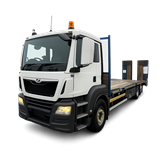
A cab chassis truck is sold as a cab and bare chassis rails, ready for a body. That makes the advertised price hard to compare: one quote may be for the bare chassis, another for a factory-bodied "ready to work" truck, and a third may be drive-away with accessories included.
The ranges below come from manufacturer list prices and dealer advertisements published in 2026. Use them to sense-check quotes, not as a price list: dealer stock, discounts and state charges vary.
Truck type | Licence | Indicative 2026 new price | Examples |
|---|---|---|---|
Light-duty cab chassis or basic factory tray | Car (4.5 t GVM) | $58,000-$65,000 before on-road costs | Isuzu NMR 60/45-150 SWB from $58,475; Hino 300 616 alloy tray from $60,124 (RRP) |
Ready-built alloy tray truck | Car (4.5 t GVM) | $68,000-$78,000 drive-away | Fuso Canter 515 City alloy tray $67,999; Fuso Canter 515 alloy tray $73,900; Hino 616 alloy tray pack with accessories $77,990 |
Dual-rated trade pack | Car or LR (4.5/6.5 t) | About $91,000-$92,000 drive-away | Isuzu NPR 45/65-175 Tradepack $91,490-$92,300 |
Factory tipper | Car or LR | About $83,000-$99,000 | Hino 616 Tipper Pro $83,259; Fuso Canter 815 factory tipper $99,000 drive-away |
8-pallet curtainsider or freight body | LR (8.8 t GVM) | About $133,000-$140,000 drive-away | Isuzu NQR 88/80-190 Freightpack $132,700; NQR 8-pallet curtainsider $139,900 |
Medium-duty cab chassis, no body | MR | From $174,350 before body and on-road costs | Isuzu FVR from $174,350 to $190,750 (RRP) |
Two patterns stand out. First, a car-licence tray truck typically costs $7,000-$20,000 more than the cheapest list price once a body, accessories and on-road costs are included. Second, the step from a 4.5-tonne truck to an 8-pallet freight truck roughly doubles the outlay, because you are paying for a heavier chassis, a larger body and a different licence class.
What sits between the chassis price and the drive-away price?
Most of the gap between quotes comes from five items. Ask every supplier to list them separately.
Body and fitting. A tray, tipper, pantech, service body or refrigerated body, plus the subframe, mounting and any certification. Factory body packs bundle this into the vehicle price; custom bodies are quoted by the body builder.
Accessories. Bullbars, towbars, ladder racks, toolboxes, window tint, dash cams and beacons are often added to stock trucks. They are useful, but each one adds weight as well as cost, and that weight comes off your payload.
Stamp duty. Rates differ by state and by vehicle type. Some states treat trucks over 4.5 tonnes GVM as heavy vehicles: Western Australia charges 3% of the dutiable value capped at $12,000, while Tasmania charges $1 per $100.
Registration and CTP. Trucks over 4.5 tonnes GVM pay heavy vehicle registration charges set under a national model law, so annual rego is materially higher than for a 4.5-tonne truck.
Dealer delivery and pre-delivery charges. These are normally inside a drive-away price and outside a list price.
Does the GVM rating change the price?
Yes, in three ways. A higher GVM rating usually means a heavier, more expensive chassis; it can push the truck into heavy vehicle stamp duty and registration; and it requires a Light Rigid or higher licence, which narrows your pool of drivers.
Dual-rated models such as the Isuzu NPR 45/65 can be plated at 4.5 tonnes for car-licence drivers or 6.5 tonnes for more payload. Ask the dealer to price both ratings, including on-road costs, before you decide, and size the rating to your heaviest regular load rather than your average one.
How has Euro 6 affected truck prices?
ADR 80/04, which adopts Euro VI emission standards, has applied to every new heavy vehicle model supplied in Australia since 1 November 2025. The Department of Infrastructure estimated it would add 3-5% ($4,000-$6,000) to the cost of a new truck. Euro VI trucks also weigh more because of their exhaust after-treatment, and most light-duty diesels now use AdBlue.
For buyers, this has two practical effects. Remaining Euro 5 stock, where dealers still have it, has been offered with fleet-style pricing to clear it. And when comparing a new truck with a late-model used one, the price gap partly reflects emissions hardware you will pay to run and maintain.
How do warranty and running costs compare?
Purchase price is only one line of the total cost. Warranty terms differ more than buyers expect across the main light-duty brands.
Brand and range | Standard warranty |
|---|---|
Isuzu N Series | 6 years / 250,000 km |
Iveco Daily cab chassis | 6 years / 250,000 km (extendable to 600,000 km) |
Hino 300 Series | 5 years / 250,000 km |
Fuso Canter | 5 years / 200,000 km |
Hino quotes fuel use for its 300 Series diesel of roughly 15.6-20 L/100 km depending on configuration, and claims around 20% savings for its hybrid version. Treat manufacturer fuel figures as a ceiling on what you will achieve: body shape, payload and stop-start work matter more than the badge.
Is a used cab chassis truck better value?
It can be, if the body already suits your work. The value of a used truck comes from its body: a well-kept tipper or service body can save the cost and wait of a new build. The risk is a body that is close to right but not quite, because modifying or replacing a body can erase the saving.
Before buying used, check the GVM on the compliance plate, the condition of the chassis rails around body mounts, the service history including emissions components, and whether any modifications have the required certification.
How are cab chassis trucks treated for tax?
The permanent $20,000 instant asset write-off became law in August 2026 for businesses with aggregated turnover under $10 million. A truck costs well over that threshold, so it goes into the small business pool: 15% in the first year and 30% each year after.
Trucks also sit outside two rules that catch utes and vans. The car depreciation limit and luxury car tax apply to cars designed to carry less than a tonne, so a light truck rated to carry a tonne or more is not capped by them. Confirm your position with your accountant before you sign.
If you are financing the purchase, compare the total repayment, balloon and fees, not just the weekly figure in an advertisement. EasyAsset Finance works with more than 60 lenders and can quote truck finance alongside your supplier quotes.
How to compare cab chassis truck quotes
Send every supplier the same brief so the numbers line up:
Licence class your drivers hold, and the GVM rating you need
Payload you must carry after the body and accessories are fitted
Body type and internal dimensions
Accessories you actually need
Whether you want a list price, a drive-away price, or both
When you need the truck on the road
Then ask for the chassis, body, accessories and on-road costs as separate lines. Compare cab chassis truck quotes from Australian suppliers on IndustrySearch and request up to three quotes in one step.
Frequently asked questions
How much is a 4.5-tonne cab chassis truck in Australia?
New 4.5-tonne light trucks list from about $58,000-$61,000 before on-road costs. Most buyers pay $68,000-$78,000 drive-away once a tray, accessories and government charges are included.
How much does it cost to put a body on a cab chassis truck?
It depends on the body type, material and size. A basic alloy tray is the cheapest option; tippers, pantechs, service bodies and refrigerated bodies cost progressively more. Ask for the body to be quoted as its own line so you can compare factory and custom options.
Do I pay stamp duty on a truck?
Yes. Every state charges duty on vehicle registration, but several use a different rate for trucks over 4.5 tonnes GVM. Use your state revenue office calculator with the exact GVM rating.
Is a light truck better value than a ute?
A ute is cheaper to buy and run, but a car-licence light truck carries about 2 tonnes once bodied, roughly double what most utes can legally carry. If you regularly load a ute to its limit, a truck is often the lower-risk choice.
Can I claim the instant asset write-off on a truck?
Not if it costs $20,000 or more, which almost every truck does. It is depreciated through the small business pool instead.
-160x160-state_article-rel-cat.png)
-160x160-state_article-rel-cat.png)