
High Shear Mixer Prices in Australia: Batch, Inline and Vacuum Systems (2026)
Key takeaways
Australian listings: high shear mixers on IndustrySearch are listed at $20,000 to $80,000, averaging $50,000, and local suppliers quote to your vessel, product and site.
Imported budget equipment: Chinese manufacturers list inline homogenisers from about US$1,560 to US$2,300 (A$2,200 to A$3,300), and a 500 L tilting vacuum homogeniser emulsifier at US$52,000 (about A$73,800).
Used equipment: used rotor-stator mixers from established brands are widely traded overseas; check seal condition, rotor and stator wear, and whether replacement heads are still available.
The mixer head is rarely the whole cost: vessels, lifting stands, variable speed drives, jacketing, vacuum, powder induction, seal systems, explosion-protected motors and documentation are priced separately.
Tax: a mixer under $20,000 can be written off immediately by small businesses with aggregated turnover under $10 million that use simplified depreciation, for the portion used for a taxable purpose.
A high shear mixer in Australia costs from under A$10,000 for a laboratory rotor-stator unit to well over A$70,000 for a vacuum emulsifying system, with fully engineered process skids above that. What drives the number is the type of mixer, motor power, wetted materials, and how much of the vessel and controls are included. This guide covers batch, inline, bottom-entry and vacuum high shear mixers for liquids. High shear granulators for powder granulation are a different purchase, covered briefly at the end.
High shear mixer prices by source
The prices below come from different kinds of source and are not directly comparable, so they are grouped rather than blended into one Australian range. Conversions use about A$1.42 per US dollar and A$1.62 per euro at the time of writing; recheck the listing and the exchange rate before you budget.
Imported budget equipment (manufacturer list prices)
Equipment | Price | Reference point |
|---|---|---|
Batch homogenising mixer | US$880 (about A$1,250) | Chinese manufacturer listing |
Inline homogeniser | US$1,560 to US$2,300 (about A$2,200 to A$3,300) | Chinese manufacturer listing |
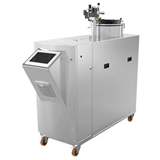
500 L tilting vacuum homogeniser emulsifier | US$52,000 (about A$73,800) | ZONESUN ZS-LTR500 listing |
In Australia, the IndustrySearch listing range is $20,000 to $80,000, averaging $50,000, and local suppliers including FluidPro, Mixquip, I.B. Engineering, Concept Automation and Tetra Pak quote to your vessel, product and site.
What changes the price
Mixer type: batch, bottom-entry, inline and vacuum emulsifier designs differ widely in complexity (see [Article 2: Batch vs Inline High Shear Mixers]).
Motor power and size: price rises with motor power and mixer size.
Wetted materials and finish: 316 stainless steel is standard on many units; higher polish, special alloys or hygienic certification add cost.
Seals: single mechanical seals suit many duties, while double seals with a seal support system cost more and are often specified for demanding or hygienic duties.
Stator heads: interchangeable disintegrating, slotted and fine screen heads let one mixer handle different jobs, at extra cost per head.
Hazardous-area motors: explosion-protected motors and controls cost more than standard ones (see [Article 3: How to Choose a High Shear Mixer for Food, Pharmaceutical, Cosmetic and Chemical Production]).
Integration: lifting stands, vessels, jackets, vacuum, powder induction and controls turn a mixer into a system.
What quotes often leave out
the vessel, or modifications for a bottom-entry port
a hydraulic or pneumatic lifting stand for batch mixers
variable speed drive and controls
heating or cooling jackets and temperature control
vacuum pump and system for de-aerated products
powder induction hoppers or manifolds for inline mixers
seal support systems and spare seal kits
spare stator heads for other products
documentation for GMP qualification, if you make therapeutic goods
freight, 10% import GST, and installation by a licensed electrician; import duty depends on the tariff classification and any free trade agreement or concession, so ask a customs broker rather than assuming it applies
Ask each supplier to price these separately and to state what batch size and viscosity the quote is based on.
New, used or imported?
Used rotor-stator mixers from established brands are widely traded overseas; check seal condition, rotor and stator wear, and whether replacement heads are still available. Budget imports cost far less up front, but check stainless grade documentation, seal quality, motor compliance with Australian supply and who will service the unit. For therapeutic goods, a machine without material certificates and qualification documents can cost more to validate than it saved.
Tax and finance
The $20,000 instant asset write-off is permanent from 1 July 2026 for businesses with aggregated turnover under $10 million that use the simplified depreciation rules. It applies per asset, and only to the portion used for a taxable purpose. A laboratory or small production mixer under $20,000 can qualify in the year it is first used or installed ready for use; assets of $20,000 or more go into the small business pool at 15% in the first year and 30% after. Ask your accountant how a mixer, vessel and controls should be itemised.
How to get quotes you can compare
Product, batch size or flow rate, and viscosity range
What the mixer must do: dissolve powders, emulsify, disperse or reduce particle size
Your existing vessel (if any) and how the mixer will mount
Temperature, vacuum and cleaning requirements
Industry and regulatory context: food, therapeutic goods, cosmetics or hazardous area
A request to price mixer, vessel, stand, controls, seals, heads and installation separately
Compare quotes: Get quotes from high shear mixer suppliers on IndustrySearch to compare designs, inclusions and support side by side.
Frequently asked questions
How much does a high shear mixer cost in Australia?
IndustrySearch listings range from $20,000 to $80,000.
How much does a vacuum homogeniser emulsifier cost?
One 500 L tilting unit for creams and ointments is listed at US$52,000 (about A$73,800) before freight, duty and GST.
What about high shear granulators?
They are a separate category of equipment for wet-granulating powders, mainly for tablets. Used granulators from brands such as Glatt and Diosna are advertised overseas at €10,000 to €100,000 (about A$16,200 to A$162,000), and new systems are quoted per project. See the High Shear Granulator & Mixer category on IndustrySearch.
Can I instantly write off a high shear mixer?
Yes, if it costs under $20,000, your aggregated turnover is under $10 million, you use simplified depreciation, and it is first used or installed ready for use in the income year. Only the taxable-use portion qualifies.