
Key takeaways
Match the washer to the dirt and the skin: drum and barrel washers suit heavily soiled roots; brush washers and polishers suit firm skins; flume, water-screw and flow-tank washers suit leafy, cut or bruise-prone produce.
Size for your worst intake, not your average: specify tonnes per hour at peak season with the wettest, dirtiest produce you receive, and ask how residence time changes at that rate.
Dry before you pack or coat: drying is essential before coating, and many packing lines need it too, depending on the crop and what follows; absorbent drying rollers or air drying remove surface water so produce packs dry and coatings apply evenly.
Waxing uses approved glazing agents: Australian apple coatings are based on carnauba wax (903) and shellac (904), both approved food additives used within the Food Standards Code's permissions and conditions, and are applied by dipping, brushing or spraying.
Recirculate water deliberately: a rotary filter (one design uses a 0.2 to 2 mm wedge-wire screen) is a first-stage treatment that lets wash water be reused and reduces the weight of waste.
The right washer depends on three things: what is stuck to your produce, how easily it bruises, and what happens to it next. Australia grew $6 billion of vegetables and $7.3 billion of fruit in 2024/25, from potatoes and carrots to lettuce and citrus, and no single washer handles all of them well. This guide compares the main washer types, then covers drying, waxing and water management.
Washer types compared
Washer type | How it works | Best for | Watch-outs |
|---|---|---|---|
Drum or barrel washer | A rotating drum tumbles produce through water and sprays | Potatoes, carrots, beetroot and other roots carrying clay, sand or soil | Tumbling can mark or bruise softer produce |
Combination drum washer and destoner | Removes soil and stones, then washes, in one machine | Root crops harvested from stony or clay ground | Larger footprint and water demand |
Flat bed brush washer | Rotating brushes clean produce as it travels across the bed, wet or dry | Firm-skinned produce: potatoes, cucumbers, tomatoes, apples | Brush type and speed must suit the skin |
Long-bristle brusher | Long bristles lift soil from irregular shapes | Pumpkins and squash | Not suited to small or delicate items |
Polisher | Brushes finish and clean the skin after washing | Potatoes and roots sold for appearance and shelf life | Adds a stage; brushes need regular replacement |
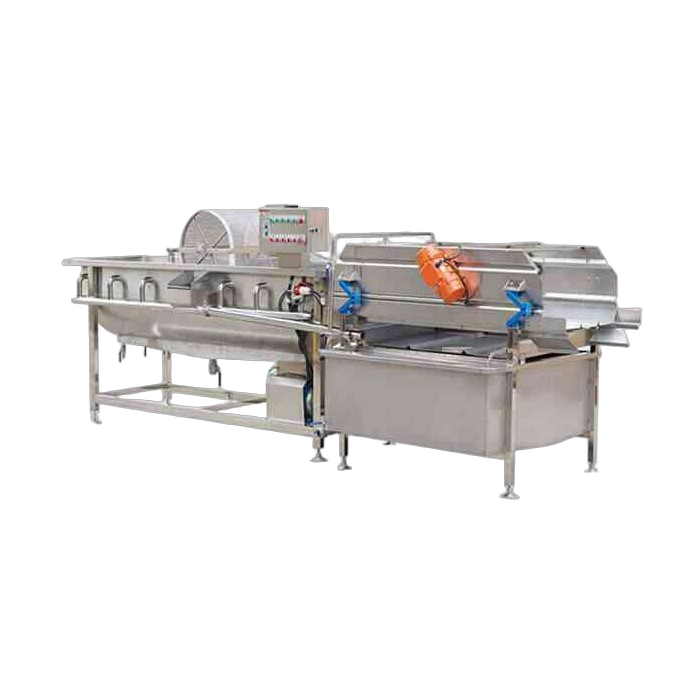
Flume, water-screw or flow-tank washer | Water carries and agitates produce with minimal contact | Leafy vegetables, cut product and produce that bruises or scuffs | Needs strong water and sanitiser control |
Batch or small continuous washer | Drum or basin wash cycles, often with spray and air agitation | Commercial kitchens, caterers and small processors | Limited throughput |
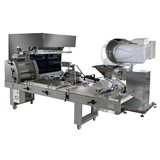
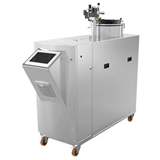
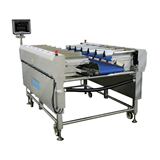
Examples on IndustrySearch show the range: TNA's Florigo ultra-clean WT 3 drum washer removes clay shells, sand and soil from potatoes, and the COMBO 3 adds destoning; Wyma's flat bed brusher runs wet or dry and its pumpkin brusher cleans without skin damage; Eillert's GWT and GWB washers use a water-screw propelling system; AHP's flow tank and conveyor is built for produce that bruises; and Summit Machinery's WA306 is a wash bath for leafy vegetables and cut product.
How to size a washer
Throughput at peak: tonnes per hour at your busiest harvest week, not the annual average.
Worst-case soil: wet clay after rain needs more residence time than dry sandy soil. Ask the supplier how cleaning results change at full throughput.
Size range: brush spacing, drum aperture and flume depth must suit your smallest and largest items.
Changeovers: if you wash several crops, check how long it takes to change brushes, speeds or water levels between them.
What feeds it and what follows: singulators, inspection tables and graders must run at the same rate. Sorting and grading equipment is covered in the Vegetable & Fruit Sorting Machine and Optical Sorter categories.
The best test is your own produce. Ask suppliers for a trial run or a reference site handling the same crop and soil.
Drying
Washed produce leaves the washer wet. Whether you need a drying stage depends on the crop and what happens next, but where you do, absorbent drying rollers, fan or air-knife tunnels, or a combination remove surface water before inspection, grading, waxing or packing. Wyma's modular flat bed systems, for example, can include absorbent drying rollers sized to the line. Size drying to the washer's throughput, or it becomes the bottleneck.
Waxing and coating
Washing removes part of the natural wax on fruit such as apples, so packers often replace it with a thin food-grade coating. Apple and Pear Australia notes that coatings on Australian apples are based on carnauba wax (glazing agent 903) and shellac (904), both approved food additives used within the Food Standards Code's permissions and conditions, applied by dipping, brushing or spraying.
Before you buy a waxer, confirm your customers want coated fruit: Red Rich Fruits, for example, stopped waxing its apples in 2017 following a change in specifications. Coating also needs a dry, clean surface, so the waxer must sit after effective drying.
Water: recirculation and treatment
Water is a major running input in any wash line. A first-stage rotary filter feeds dirty water into a rotating wedge-wire drum (one supplier's design uses 0.2 to 2 mm apertures); the water passes through for reuse while debris is carried to a waste chute, which also reduces the bulk and weight of waste. A second-stage polishing filter can follow.
Recirculated water must still be safe for its use. For leafy vegetables and melons, washing and sanitising are legal requirements under the FSANZ horticulture standards; see [Article 2: Washing Fruit and Vegetables Under the FSANZ Horticulture Standards] for what that means for water quality, sanitisers and records.
Build and hygiene checks
stainless steel food-contact parts and frames, with no hollow sections that trap water
tanks that drain fully and open for cleaning
brushes, belts and rollers that can be removed or sanitised
guarding and emergency stops that do not block cleaning access
a supplier with Australian spare parts for brushes, bearings, pumps and seals
Questions to ask every supplier
What throughput do you guarantee at our worst soil condition?
Can we trial our produce on this machine or visit a site washing the same crop?
How much water does the line use per hour, and how much is recirculated?
What sanitiser dosing and monitoring options integrate with the washer?
Which brushes, belts and seals are stocked in Australia, and what is the service response time?
Compare suppliers: request quotes from fruit and vegetable processing machine suppliers on IndustrySearch and send them your crop, soil type and peak throughput. For budget ranges, see [Article 1: Fruit and Vegetable Washing, Polishing and Waxing Equipment Cost in Australia].
Frequently asked questions
What is the best washer for potatoes and carrots?
A drum or barrel washer for heavy soil, often followed by a brush washer or polisher for finish. Stony or clay ground may justify a combination drum washer and destoner.
What washer suits lettuce and leafy vegetables?
A flume, water-screw or wash-bath system that moves produce through water with minimal mechanical contact, paired with controlled sanitising and drying.
Do I need a drying stage?
It depends on the crop and what comes next. Drying is needed before coating, and many packing lines use it so produce can be inspected and packed without free water.
What wax is used on fruit in Australia?
Coatings based on carnauba wax (903) and shellac (904), both approved food additives used within the Food Standards Code's permissions, are the main types used on apples.
Can wash water be reused?
Yes, with filtration and treatment. A rotary filter is a common first stage, and leafy vegetable and melon processors must also control sanitation under the FSANZ standards.